MobiWire
MobiWire case study, rebrand, website and brand assets for a top 5 ODMMobiWire designs and manufactures hardware for brands in 90+ countries, but its brand still looked like a supplier's. We kept the logo, built a new style guide and design system around it, rebuilt the website and the sales material, and now run the regional sites with its teams.
- regions publish on their own: Europe, US, China
- 3
The challenge
MobiWire is a top 5 original design manufacturer, valued at over $1B. It designs and builds phones, payment terminals, automotive displays and IoT devices for other brands, and ships 36 million devices a year to 90+ countries.
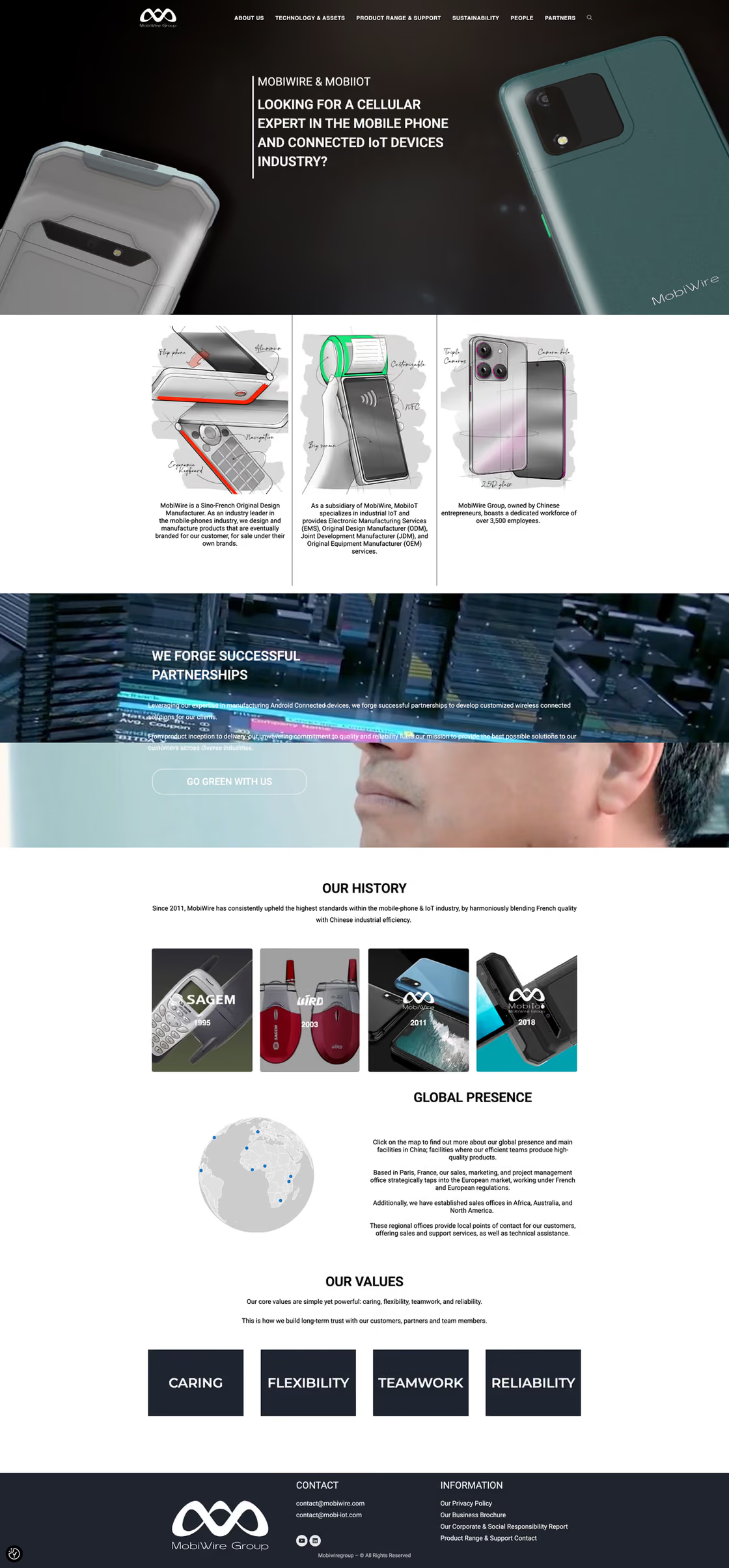
The hardware was world class, but the website was not. It opened on a stock phone render and an all-caps question, then sketches, a history timeline and a grid of values. No proof, no products in context and no clear way to start a project.

How it unfolded
It started on 31 March 2026 with a two hour kick-off interview with Hector, who leads MobiWire in the US, followed by the NDA and contracting. That interview set the map: who the buyers are, what each of them needs to see, and in which order. The site, the brand and every asset after it were built on it.
Then we looked at MobiWire next to its competitors and found the same thing everywhere: the whole category neglects its websites. Little thought for conversion, nothing that looks high end. For a buyer comparing manufacturers, the website is part of the evaluation, and that was the opening: be the one ODM whose site looks as good as its hardware.
We built the US site first, so the US team had something real to show the rest of the company. It worked: China joined, then the European team in France, from product line management to sales, marketing, design and IT. One of the European calls had the CEO of the entire group in the room. Their verdict on the US site: “a great job, not that much to change to make it ours”.
Europe was about to become MobiWire’s main market and the landing page of mobiwire.com, so we migrated the locales and made the European site the primary one. The US and Chinese sites now inherit every change from it. The whole site went live on mobiwire.com on 29 September 2026.

Same logo, new system
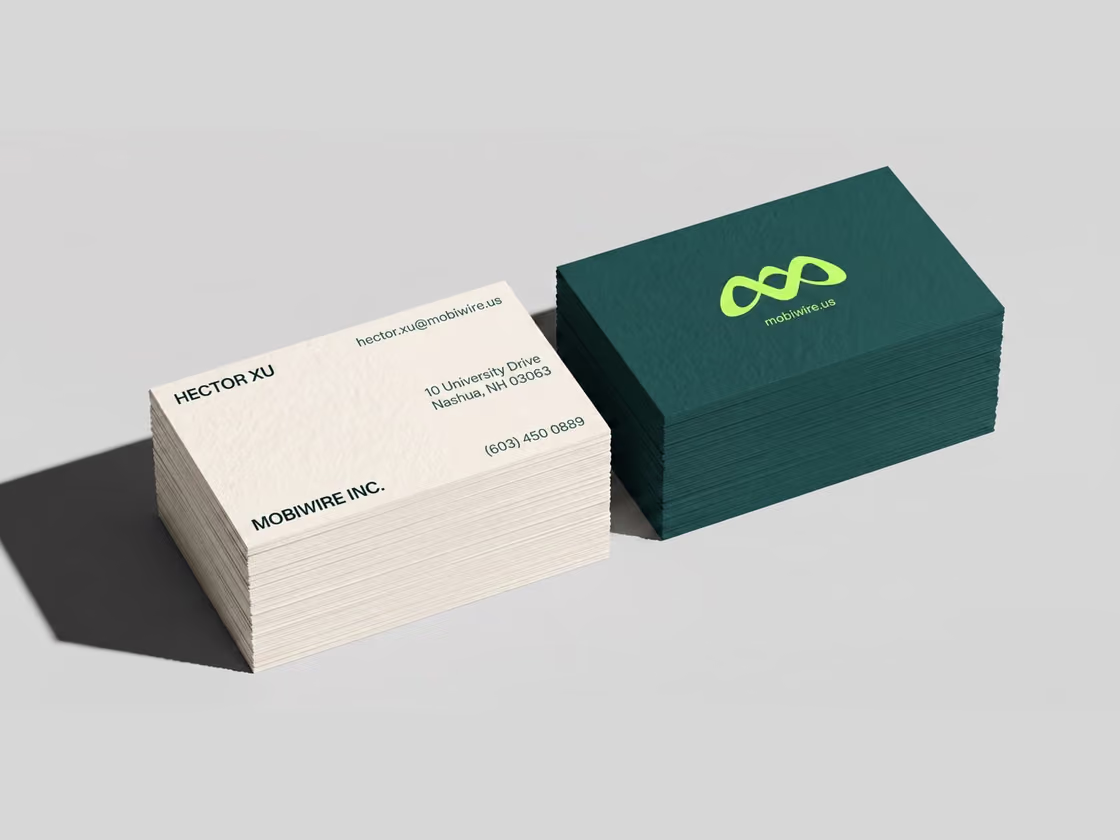
We kept the logo close to what it was. It sits on devices, packaging, factory signs and partner pages around the world, and a new mark would have meant replacing every one of them.
What changed is everything around it. We wrapped the logo in a new style guide and design system: a lime and deep green palette, a technical type system, a grid and the components the website and every asset are built from.
The homepage, section by section
Every section answers the next question a buyer asks, in the order they ask it: what is this, can I trust them, do they understand my problem, how do they solve it, how hard is it, what is the catch, and what do I do now.
Hero: what is this?
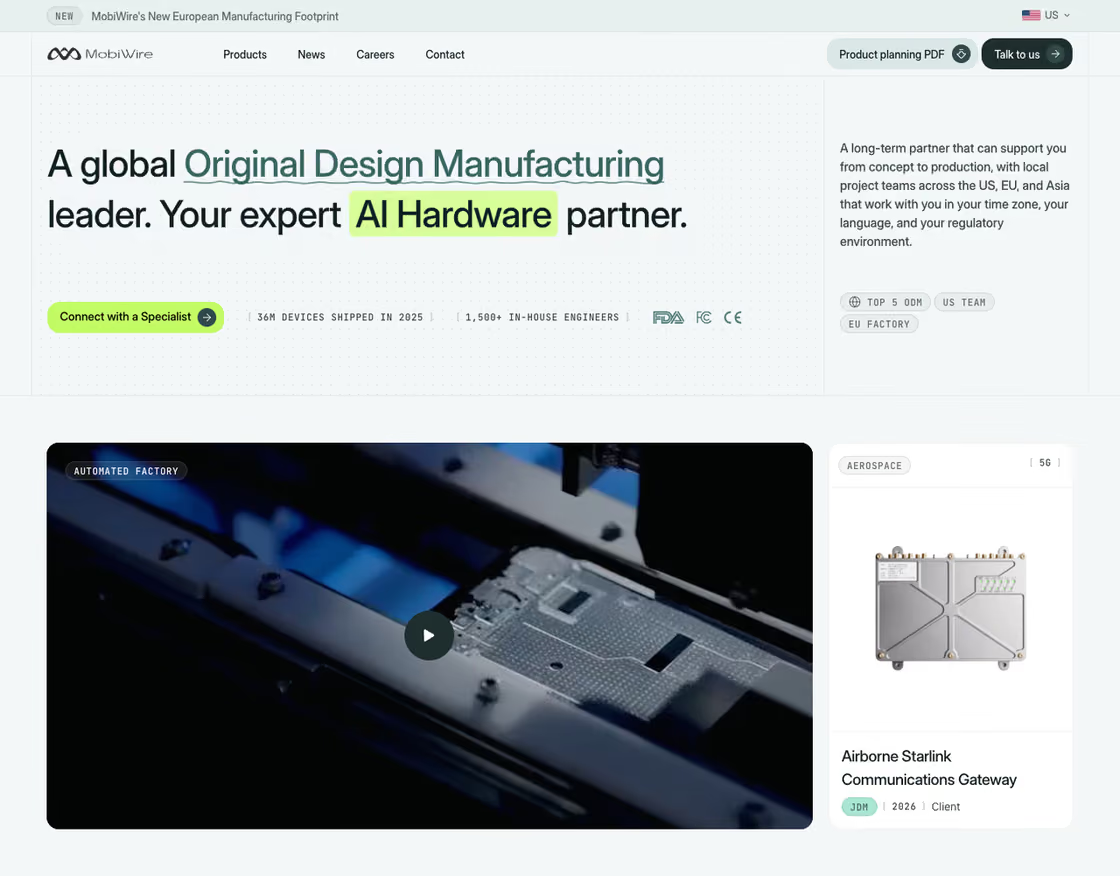
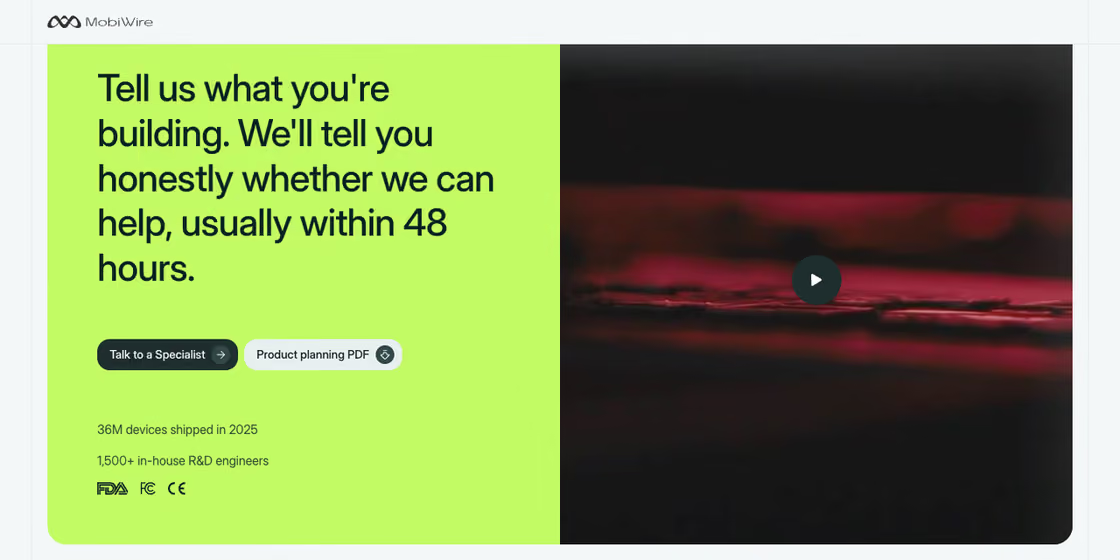
One line says what MobiWire is and who it is for, with a lime highlight on the part buyers search for. The proof sits right under it: 36 million devices shipped in 2025, 1,500+ engineers, FDA, FCC and CE, and a call to talk to a specialist.
Credibility: can I trust them?
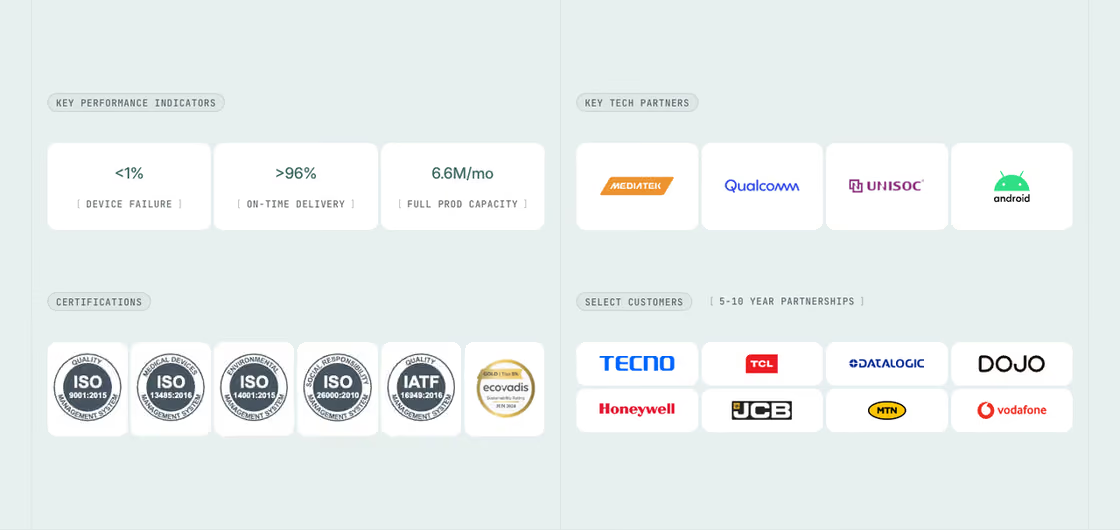
The numbers a hardware buyer checks before anything else, in one band: under 1% device failure, over 96% on time delivery, and the clients who already ship MobiWire devices.
Problem: do they get it?
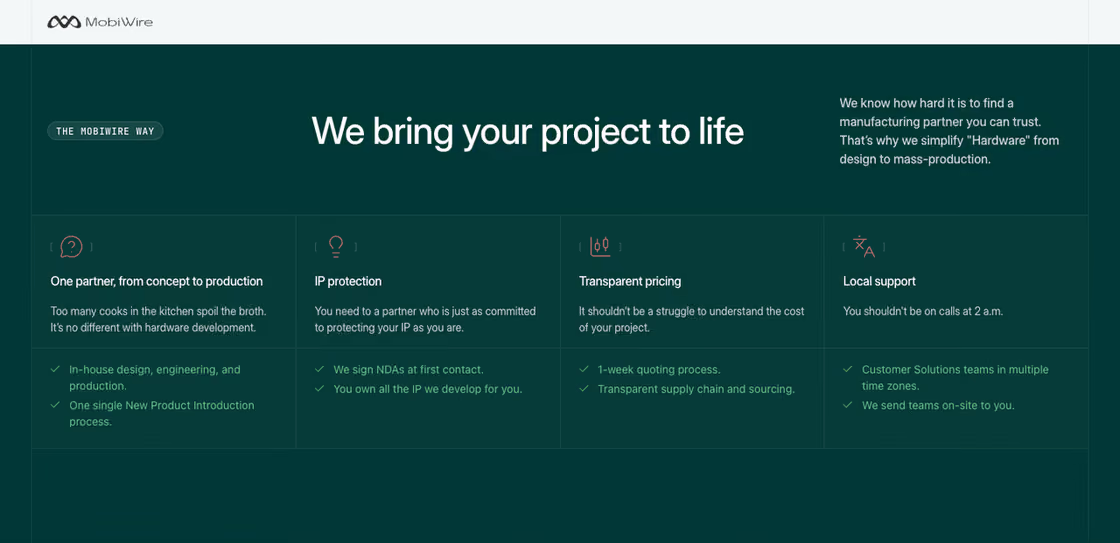
Finding a manufacturing partner is hard, and the section says so. Four common fears, each answered in two lines: too many parties, IP risk, opaque pricing and support in the wrong time zone.
Solution: how do they fix it?
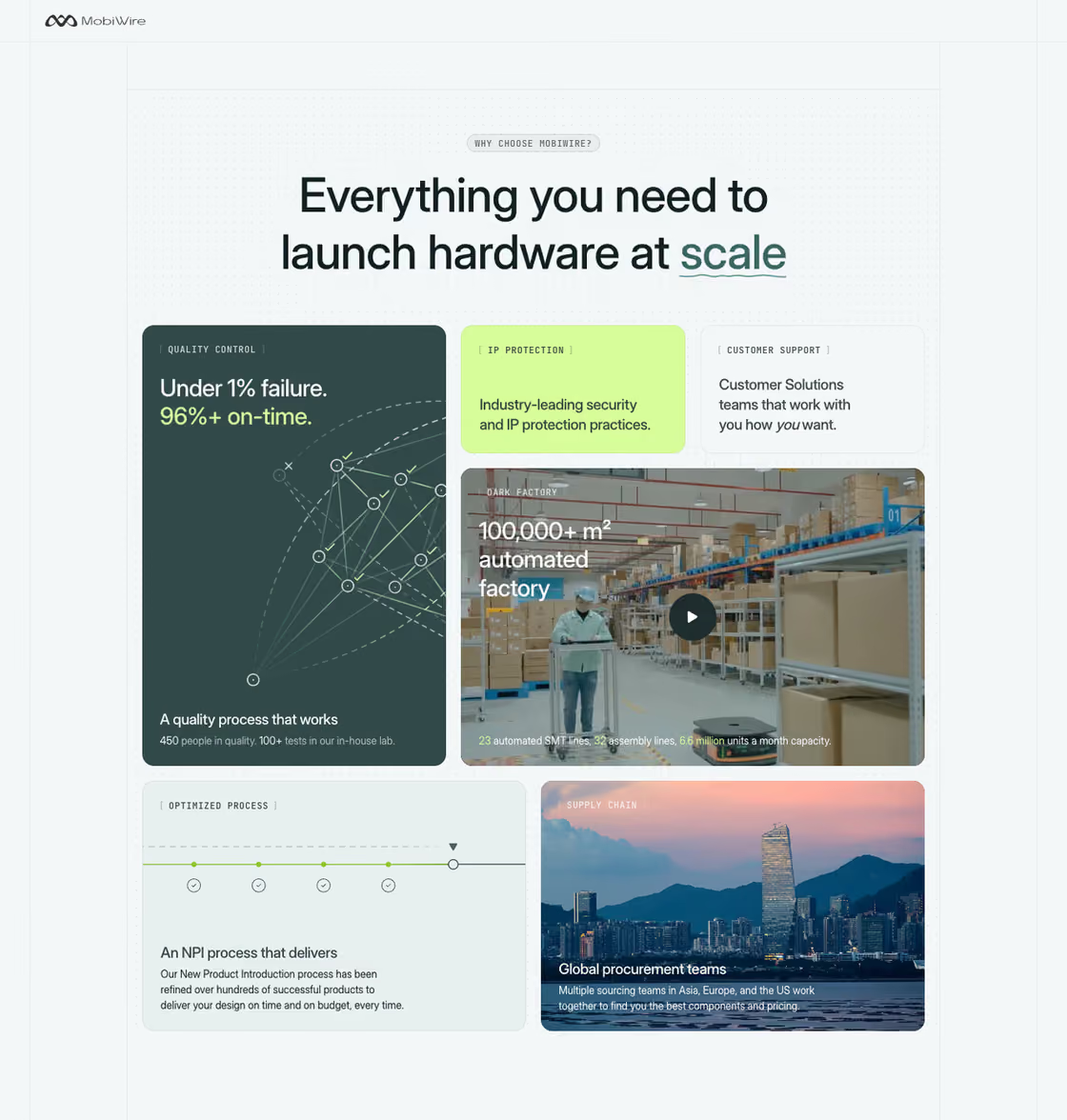
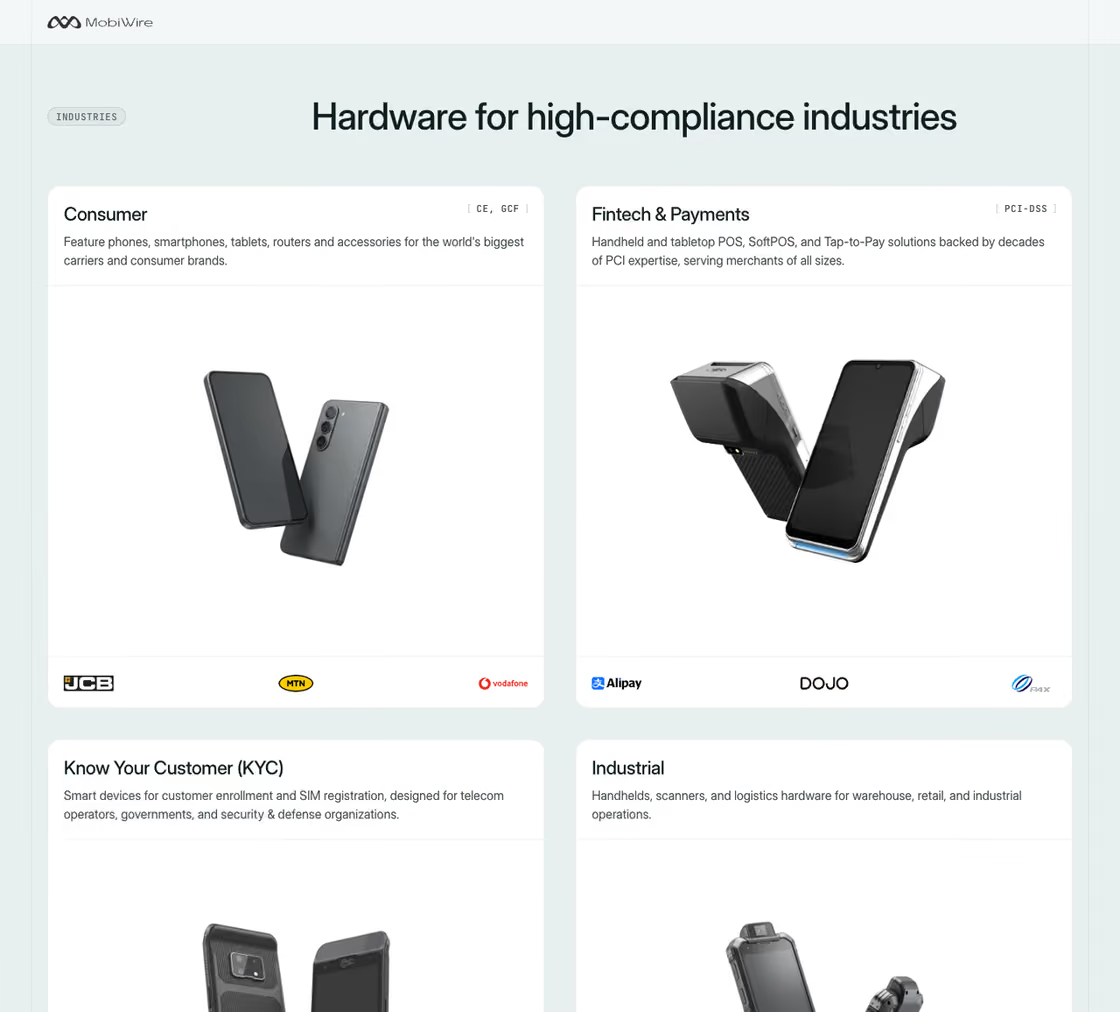
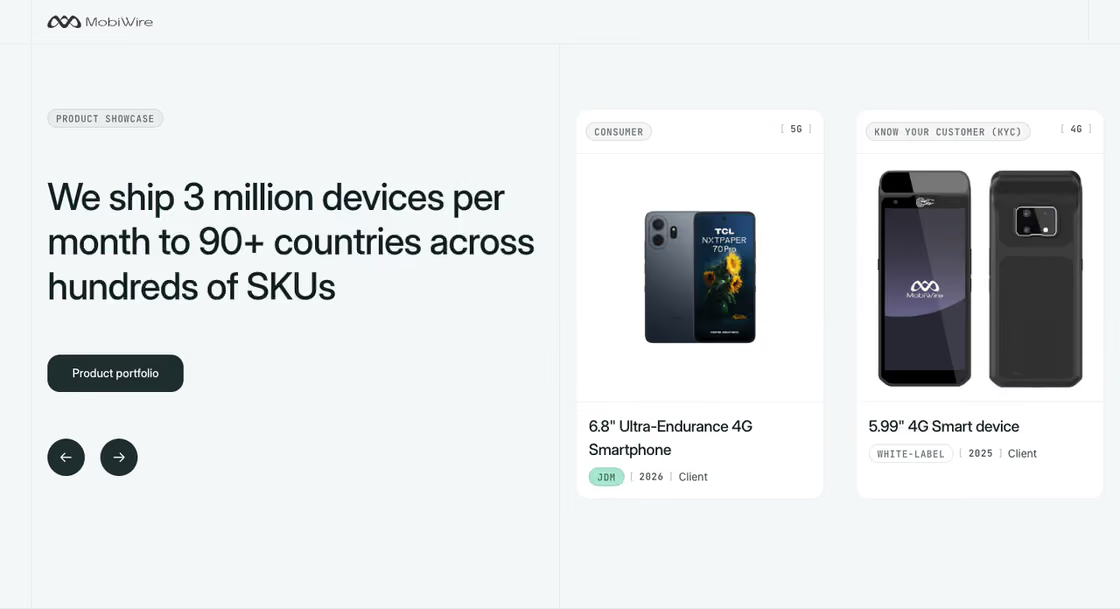
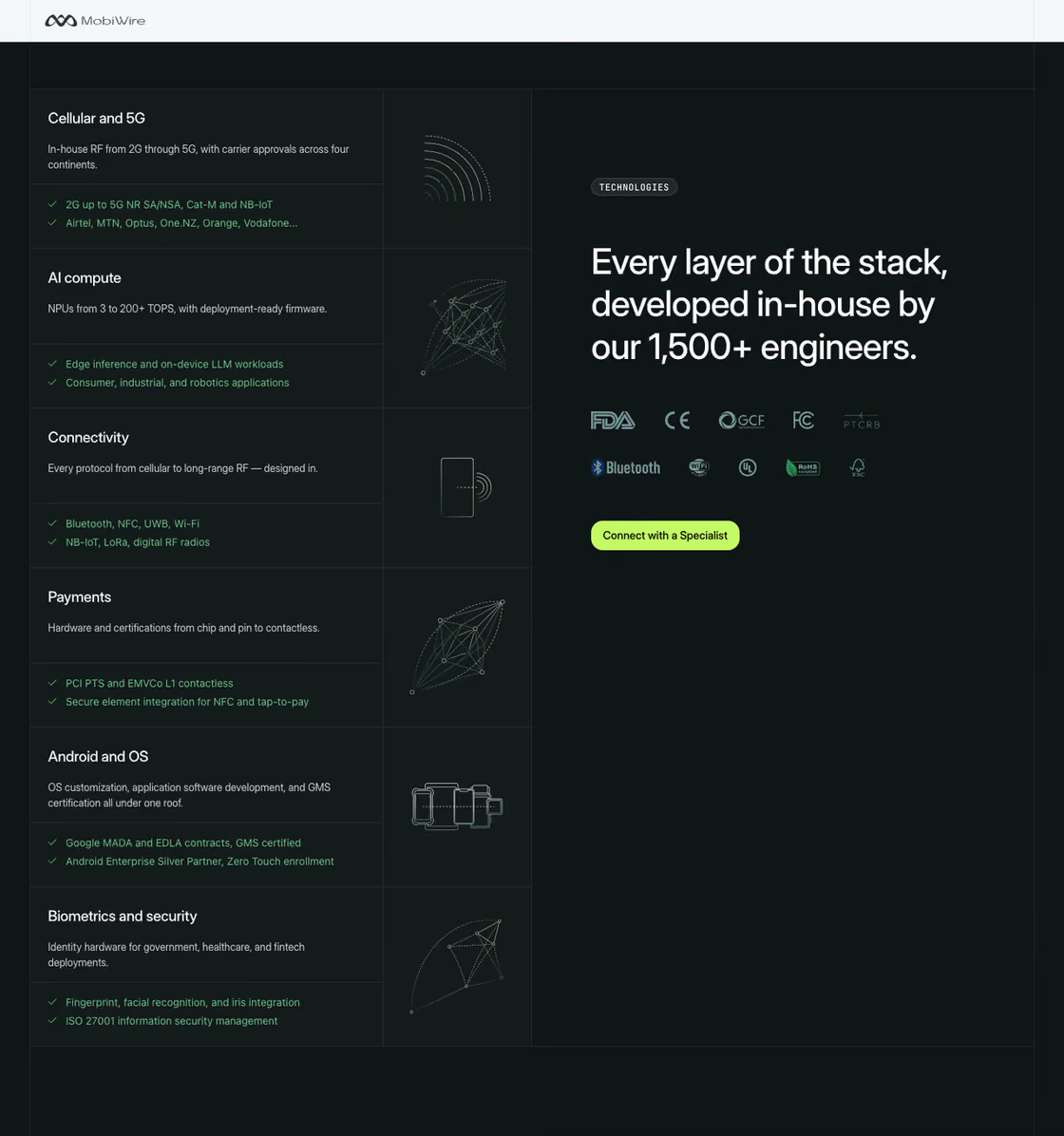
What MobiWire brings, then who it serves and what it builds: quality numbers and the automated factory, the high-compliance industries with their certifications, a product showcase, and every layer of the stack built in house.
How it works: is it going to be hard?
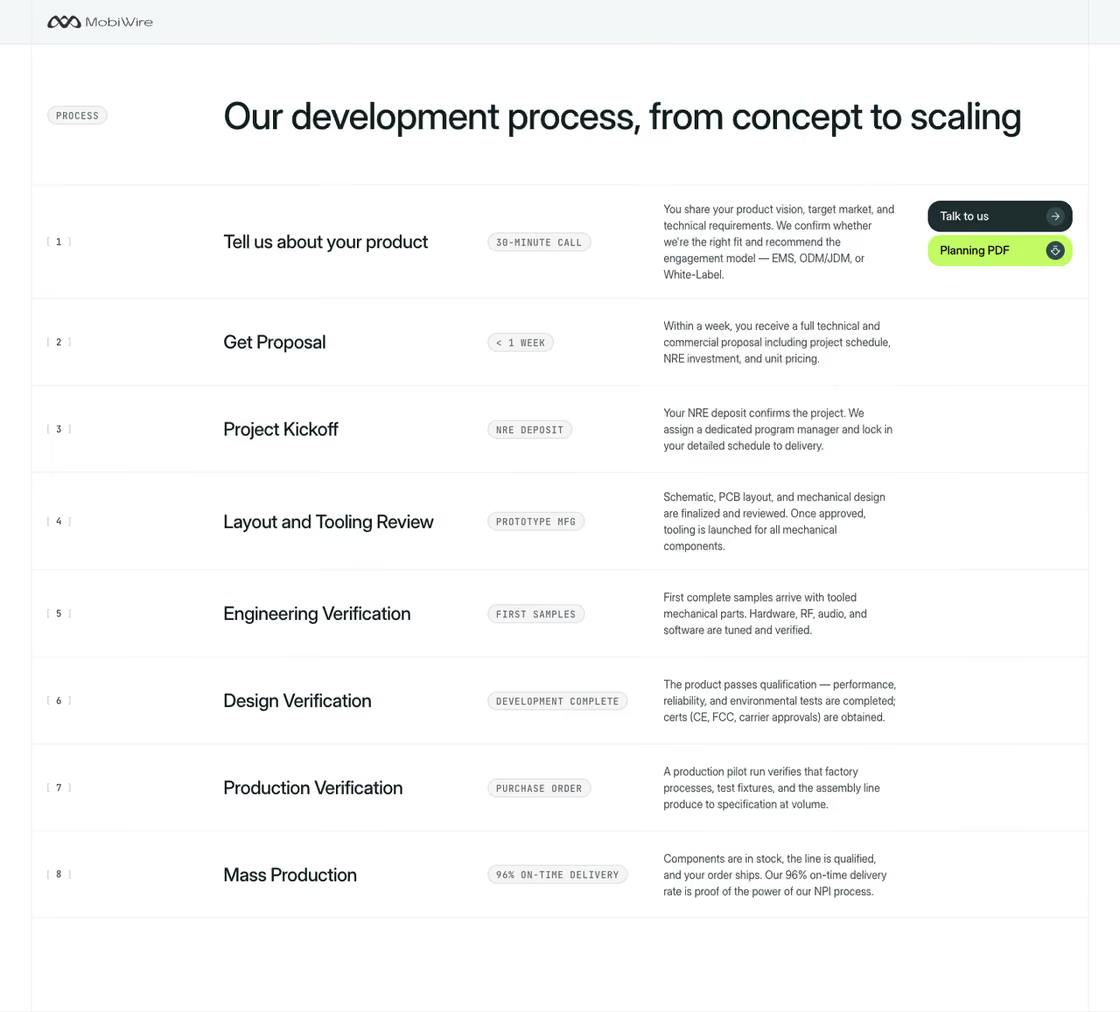
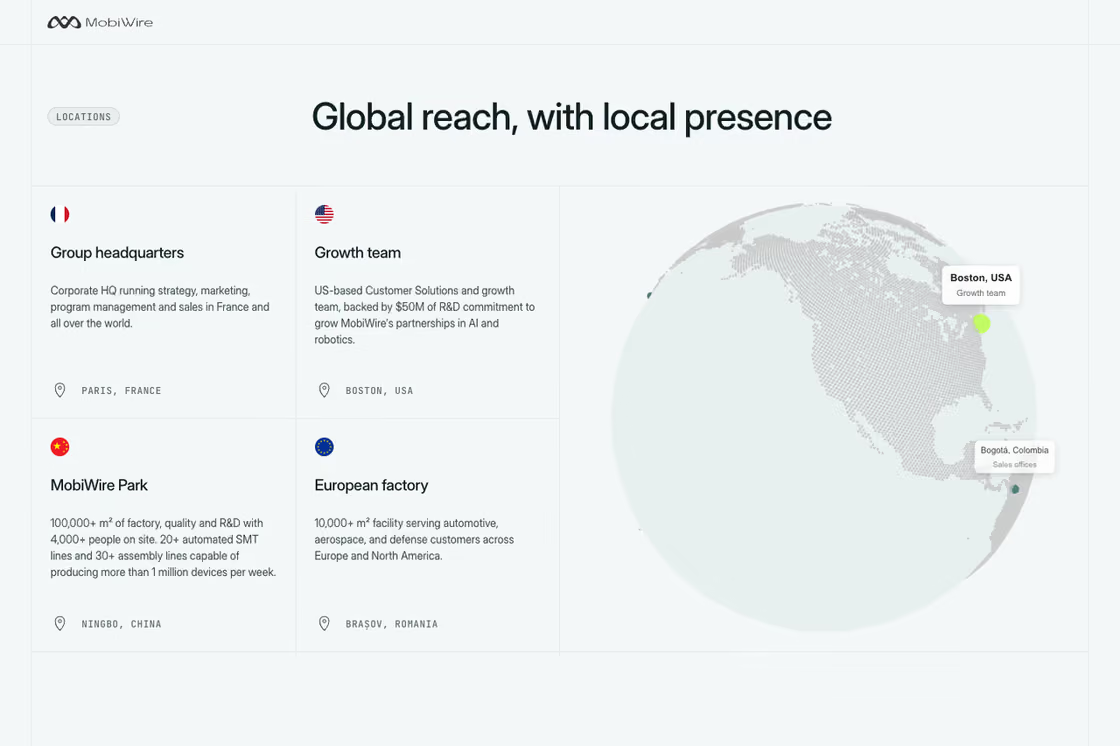
A hardware program is long and unfamiliar to most buyers. Eight steps from the first call to mass production, each with what happens and how long it takes, so the first meeting starts from a shared picture. Global locations follow, with a local team in each region.
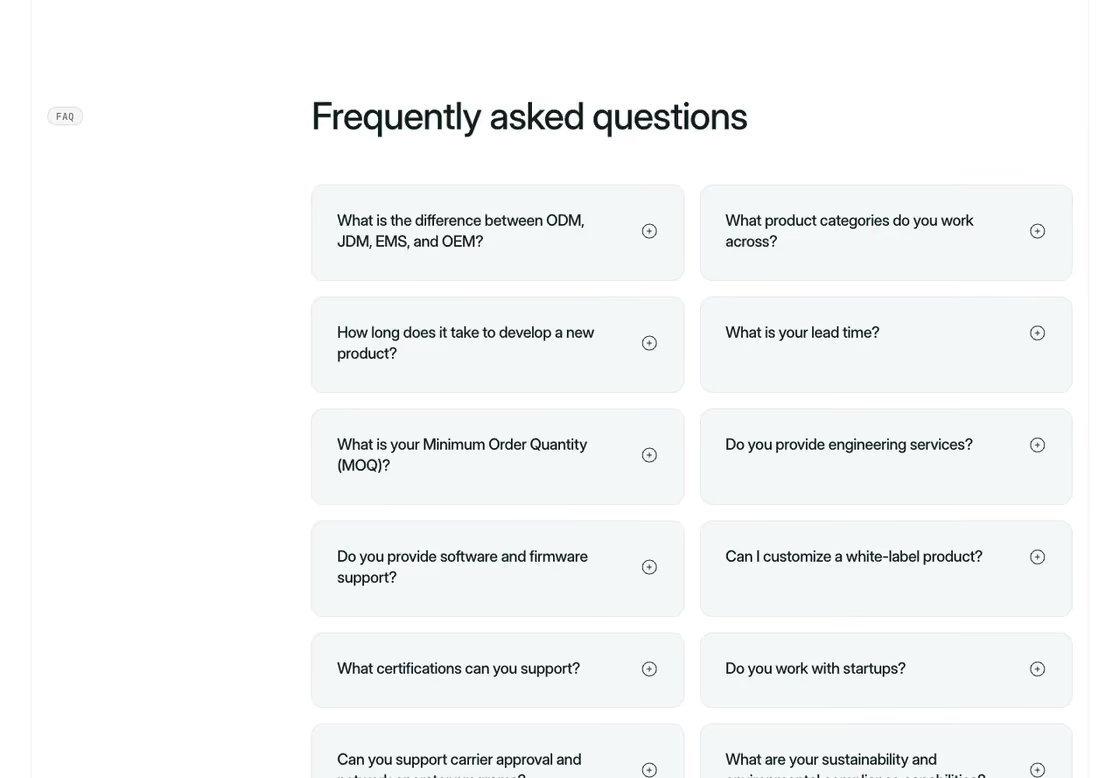
FAQ: what is the catch?
The questions a buyer would otherwise save for the first call: ODM versus JDM, lead times, minimum order quantities, certifications, IP and whether MobiWire works with startups.
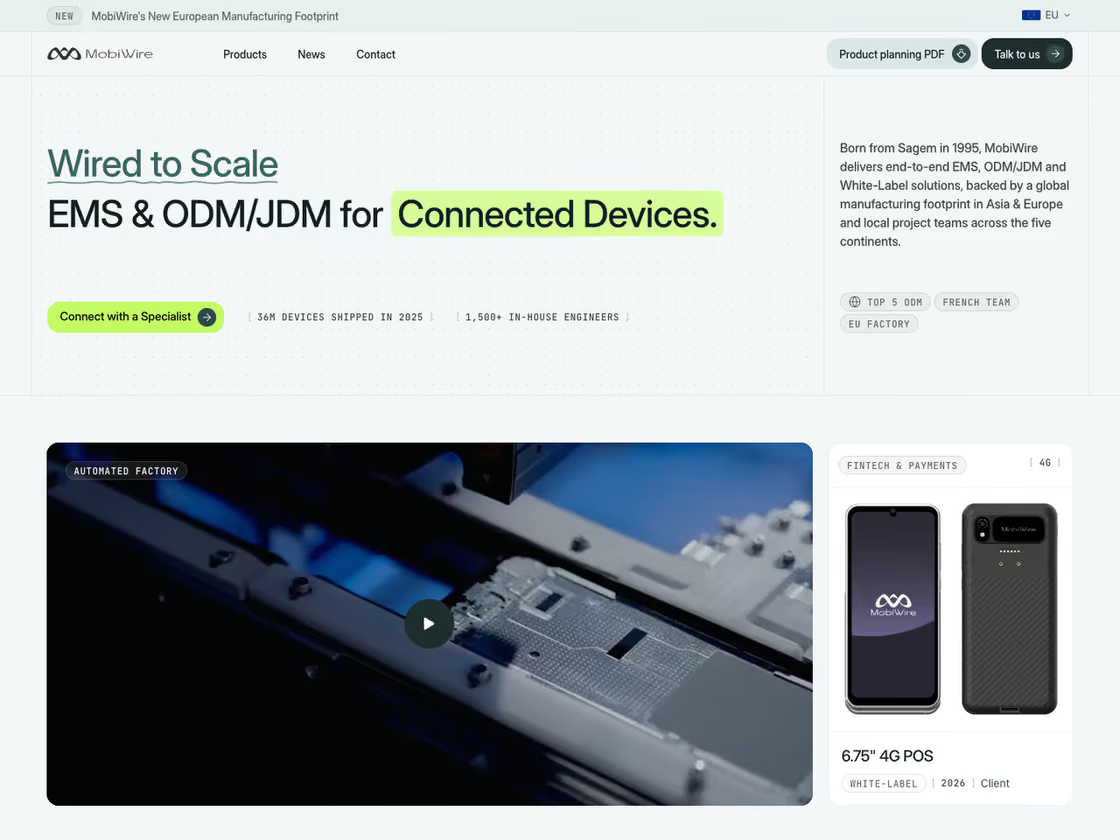
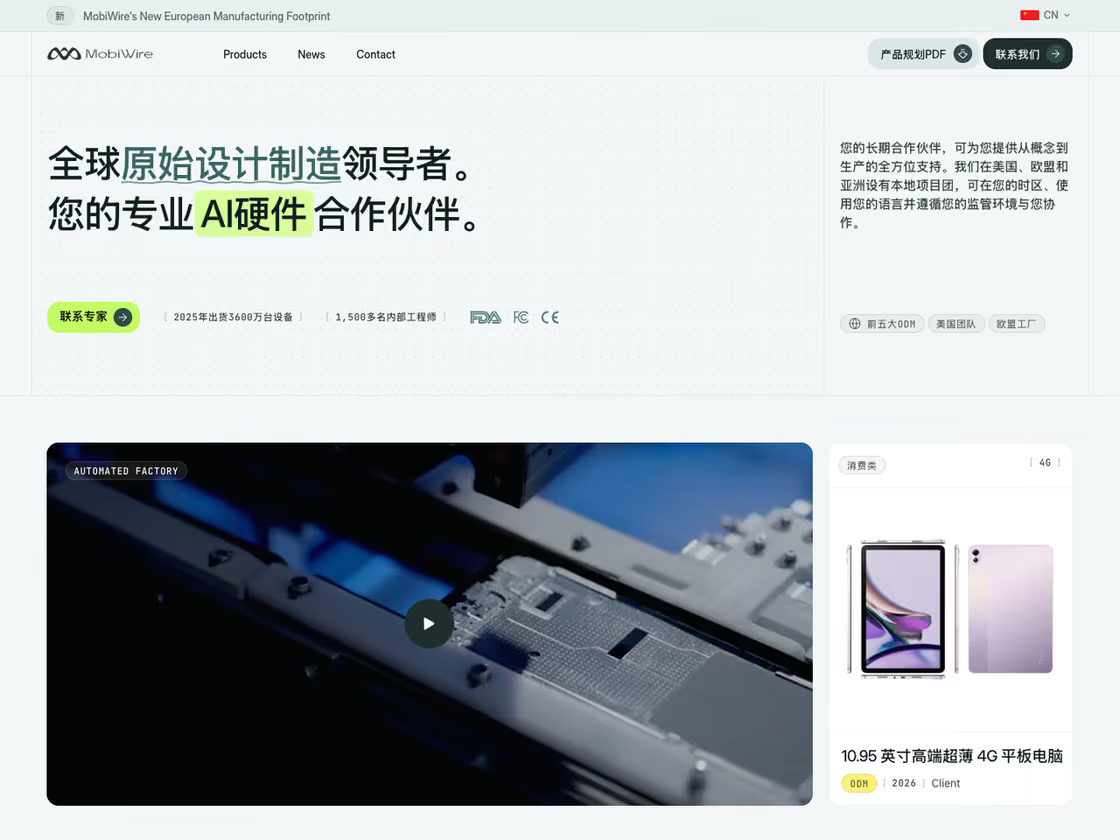
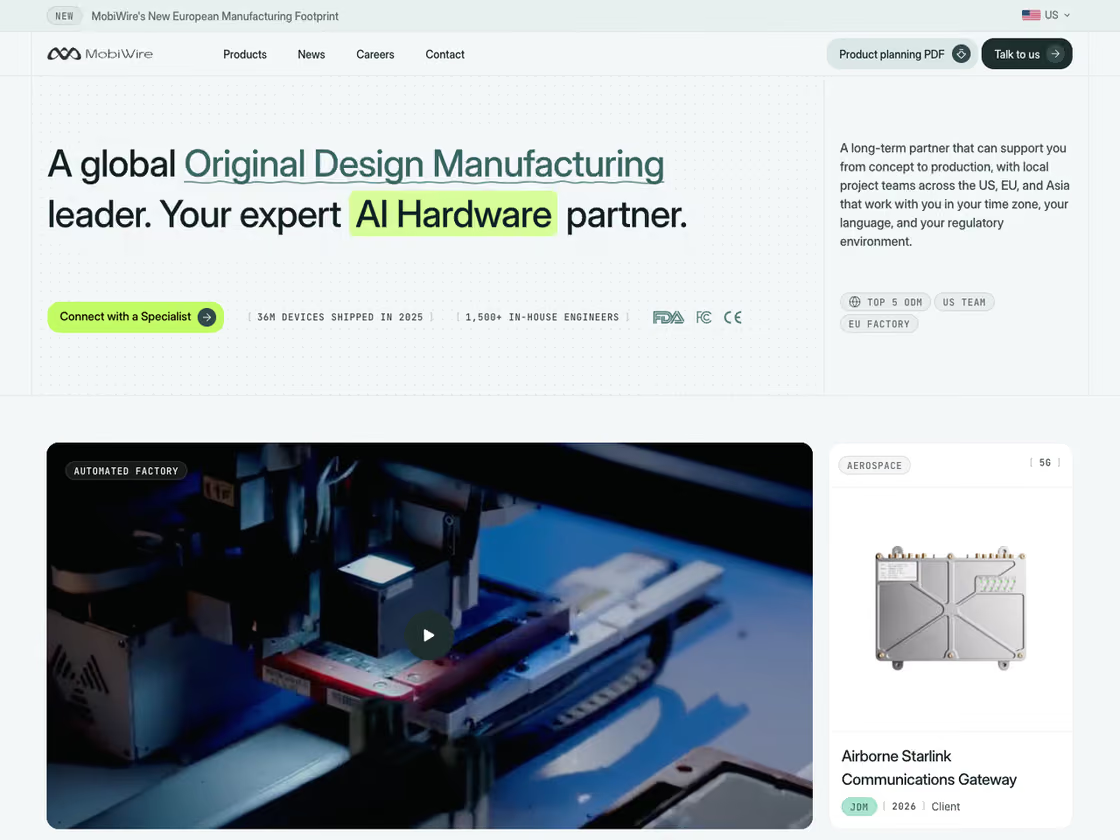
Regional sites, run by regional teams
MobiWire sells in the US, Europe and China, with different products, clients and news in each. Every region has its own site, /us, /eu and /cn, and the regional team publishes to it themselves.
The Chinese site is a complete machine translation of the whole site, every page and CMS item. The European site is the primary locale: a change made there flows to the US and Chinese sites, while each region can still change its own copy, contacts and forms. Shared pieces such as logos update everywhere at once. Products, industries, service models and support files are CMS collections, so the marketing team adds and edits them in Webflow without a developer. Once the support page template was in place, their own estimate was that two people could make the updates in less than a day.
Two new lead sources
The old site had a contact address and nothing else. The new one brings leads in two ways it never had.
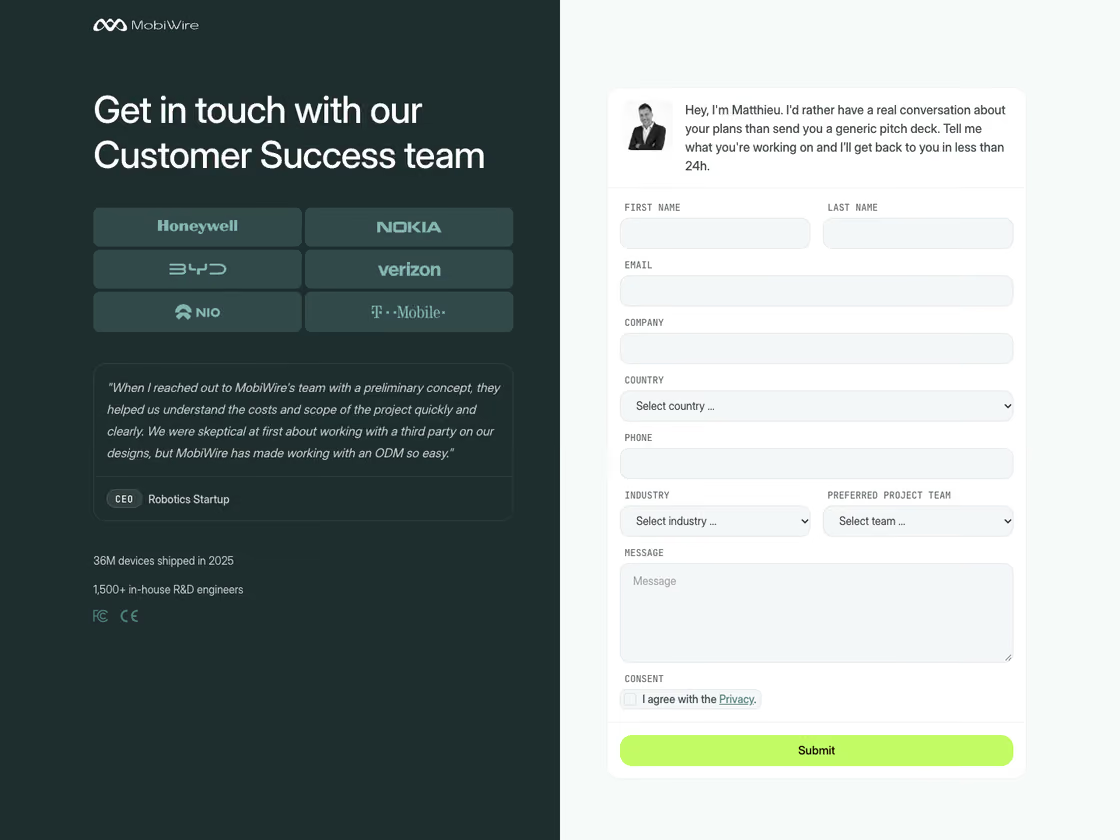
A contact page with a person on it. Matthieu from Customer Success introduces himself and promises a reply in under 24 hours. Client logos, a quote from a robotics startup CEO and the numbers that matter sit beside the form, and the form asks for industry and preferred project team, so each request lands with the right people.
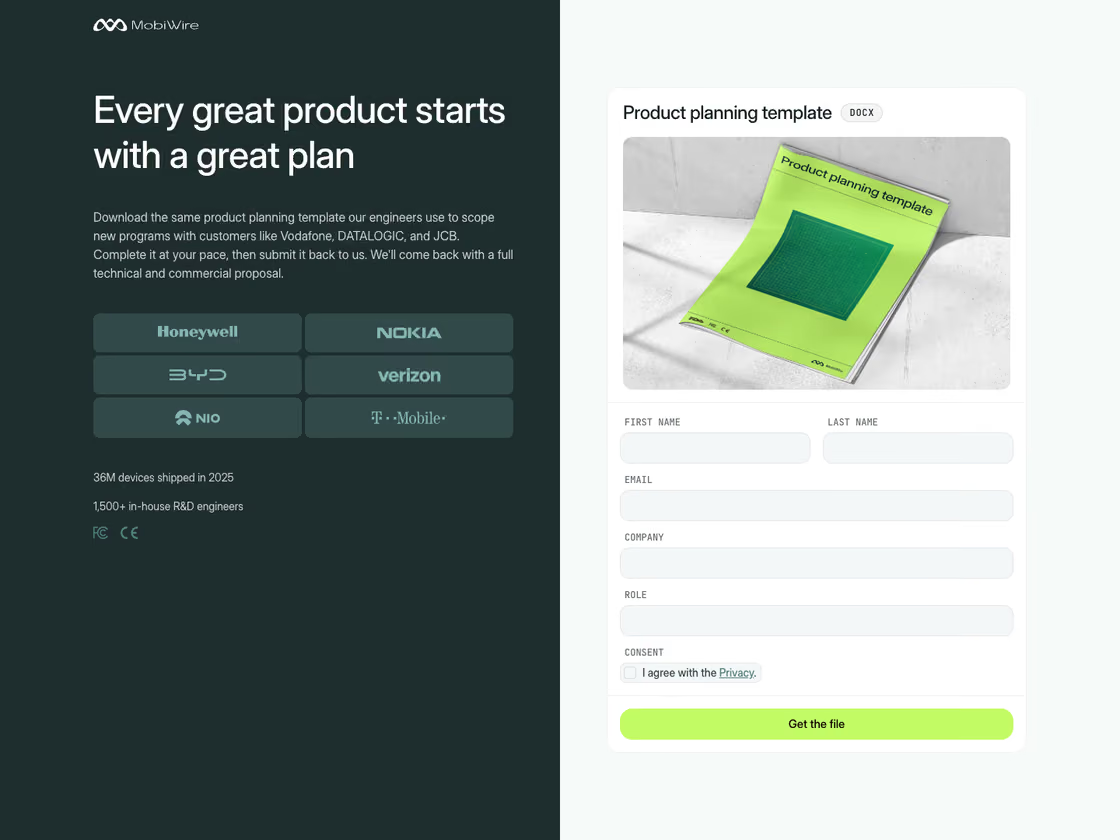
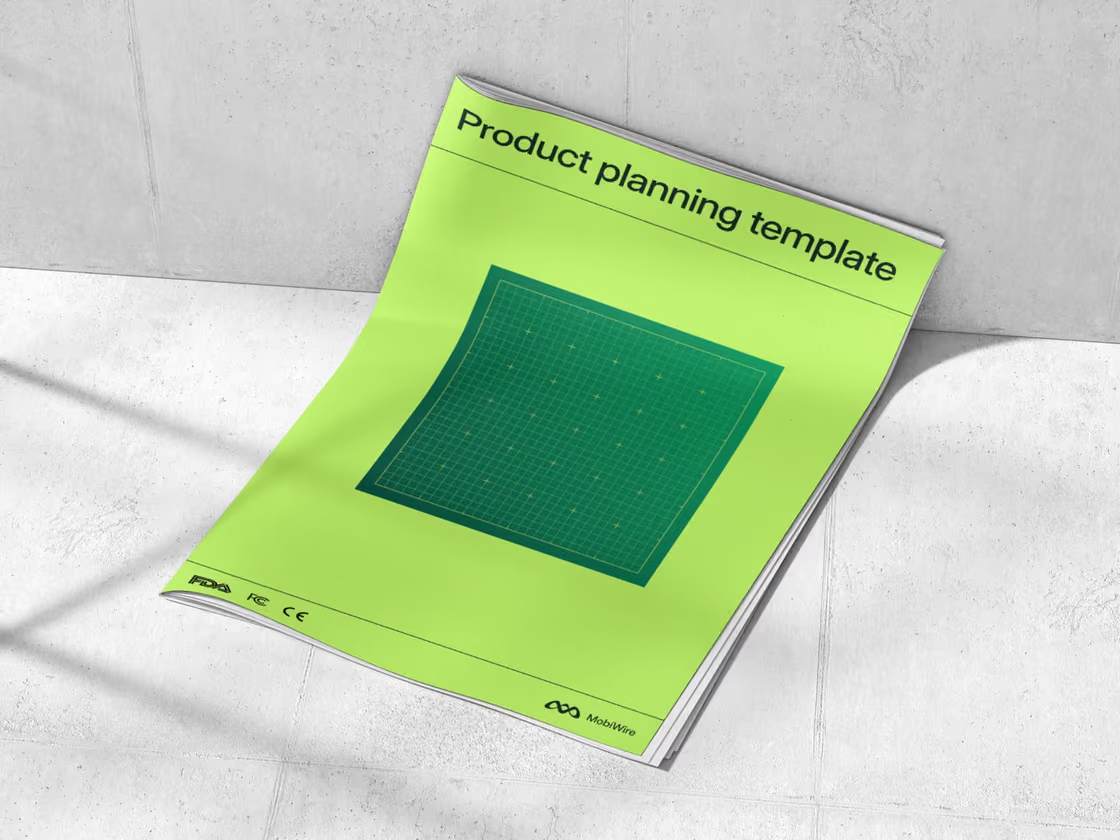
A template anyone can download. The product planning template is the same document MobiWire’s engineers use to scope programmes with customers like Vodafone, Datalogic and JCB. A buyer leaves their name, company and role, gets the file, fills it in at their own pace and sends it back for a full technical and commercial proposal. The lead arrives with the project already scoped.
Sales material and merch
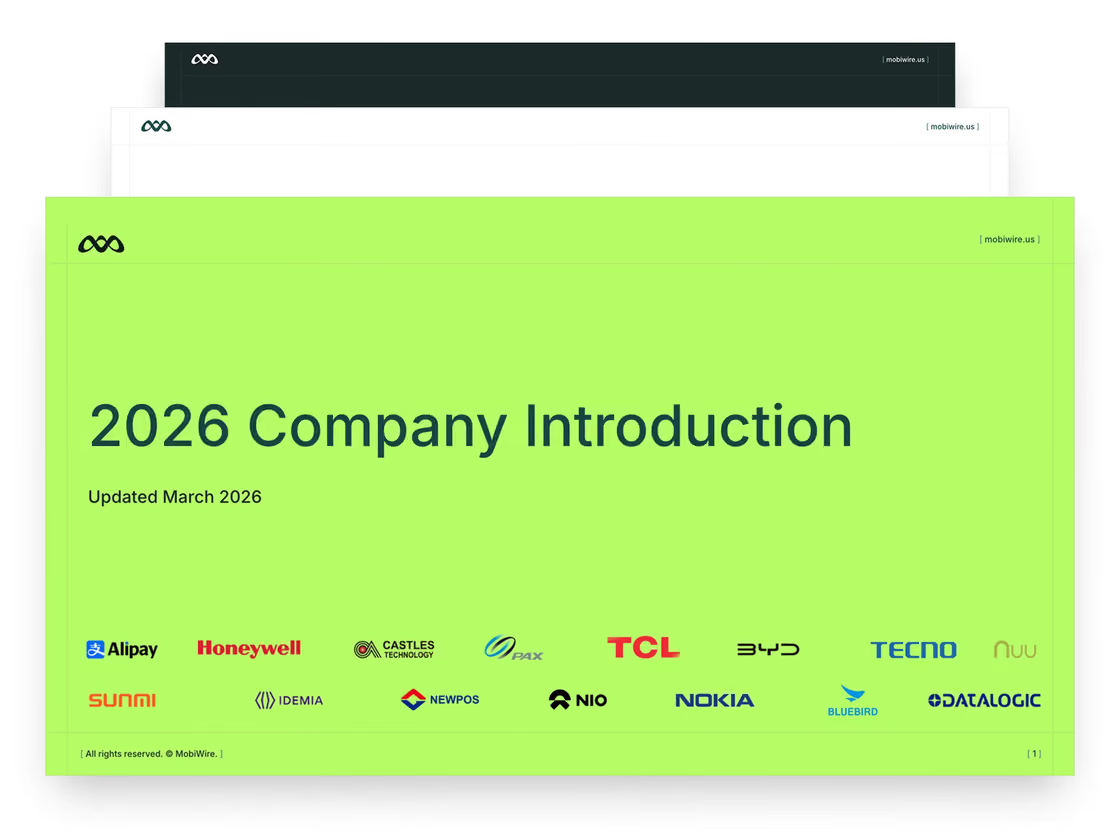
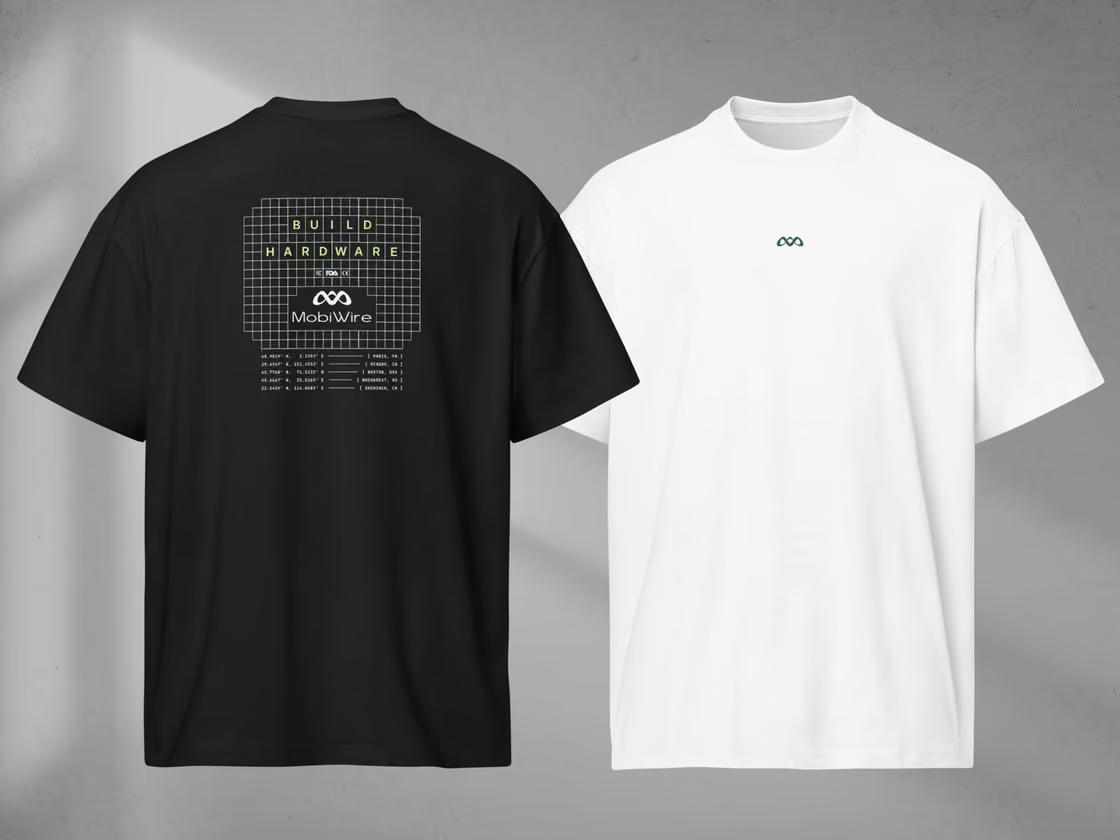
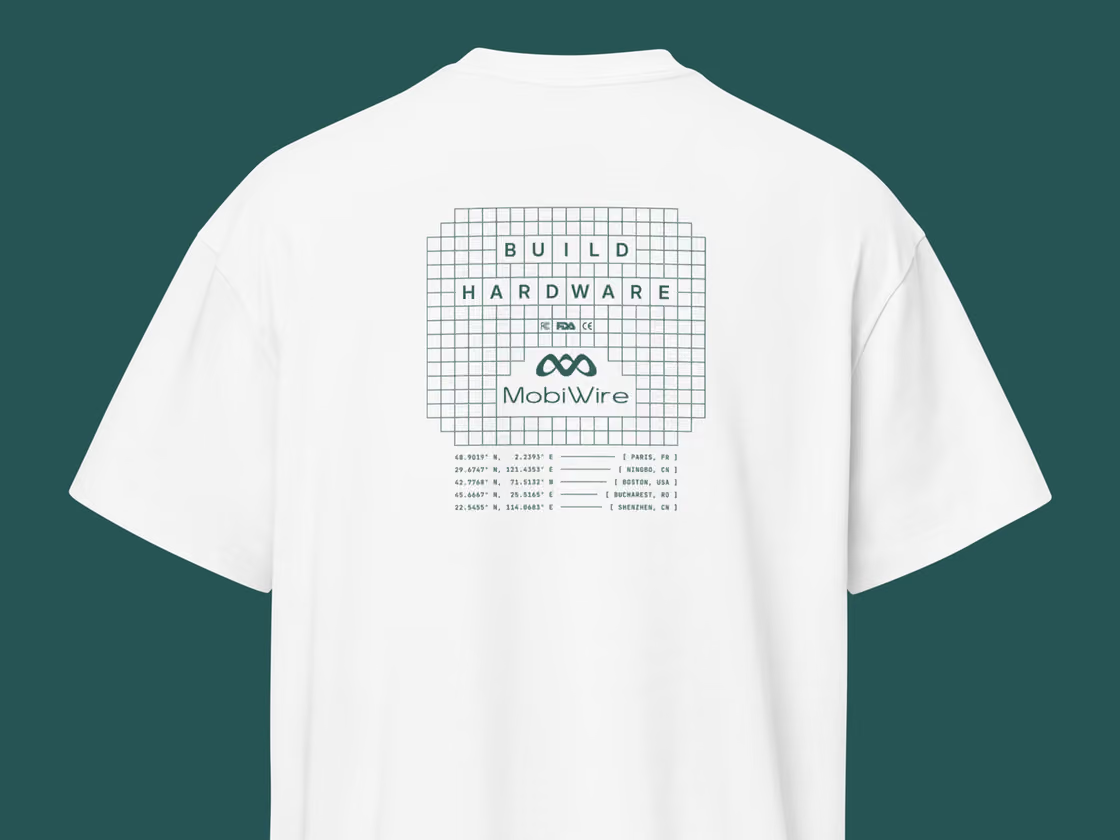
The identity carries through everything the sales team hands over or wears: the company introduction deck, the product planning template buyers download, and the team’s merch.
- regions publish on their own: Europe, US, China
- 3